


Nintendo is Great is a Substack devoted to exploring the world of Nintendo - their games, their consoles, their merchandise - in mostly chronological order, starting with the NES and continuing to the upcoming Switch 2.
Some posts are free, some are for paid subscribers only. Don’t forget to sign up below. Thanks for reading!
In August 1987, Nintendo released both The Legend of Zelda and Metroid upon an unsuspecting public. If Wikipedia and other various internet sources are to be believed, both games were released within a week of each other! Releasing two large non-linear action adventure games within a week or even in the same month - from the same company - is insane now, but it’s also proof that there were absolutely no rules for game release dates in the late 80s.
Few gamers purchased games on day one back then. Most games didn’t have hard release dates, outside of just a specific month. Also, the more popular games could be difficult to find in the wild. Anecdotes from elder statesmen like Jeremy Parish suggest an inability to purchase games like Castlevania because shipments to stores were scarce, and they would sell out immediately when they arrived. If I’m remembering the story correctly, eventually, his aunt who worked at a retail store was able to help him get NES titles on a more frequent, consistent basis. Even so, this was the late 80s landscape we were living in, folks.
Times were different. The Internet was non-existent, and Nintendo Power was still in its embryo state as the Nintendo Fun Club. Learning about new titles usually happened on the playground or through a trip to Toys R Us or Sears. Buying new games was a gamble. Sometimes you’d strike gold and walk away with Legend of Zelda or Metroid, and your summer vacation was saved. Other times, you’d get Athena and mourn long into the night; a Greek tragedy indeed.
In today’s issue, we’ll be discussing most of the games released in August 1987 and the Nintendo Fun Club Newsletter issue #2, with some bonus commercials for Zelda and Metroid. Enjoy!
THE LEGEND OF ZELDA

Originally released as a launch game for the Famicom Disk System on February 21st, 1986, The Legend of Zelda would make it to our glorious Western shores in cartridge form on August 22nd, 1987.
I didn’t grow up with Zelda. I had friends that owned it, and I would try to play it, but its non-linear nature frightened the crap out of me (“what do you mean I have to find my own way around?”). As a kid, I loved being told where to go and what to do, both in video games and life. Ironically, I’m not necessarily great at following orders, but I love a good well-trodden pathway. 2D platformers where you could only move right were my absolute jam.
Years later, when I had already played/enjoyed Ocarina of Time, Wind Waker, Twilight Princess, etc, I went backwards and finally completed the original Zelda via the Legend of Zelda Collection Gamecube compilation. I used the NES Game Atlas strategy guide and referenced GameFAQs to help me through, ensuring that my inner eight-year-old didn’t have a panic attack. I enjoyed it well-enough, but not like the kids who grew up making their own maps and discovering as many secrets as they could. For those kids, those brave pioneers, Zelda is forever baked into their DNA.
As for me, Zelda is a stepping stone to better games in the series. That said, for a game released nearly 40 years ago, it is very playable and enjoyable, something many 40-year-old games are not.
If you’d like to read more of my thoughts on The Legend of Zelda, please click the link below.

METROID
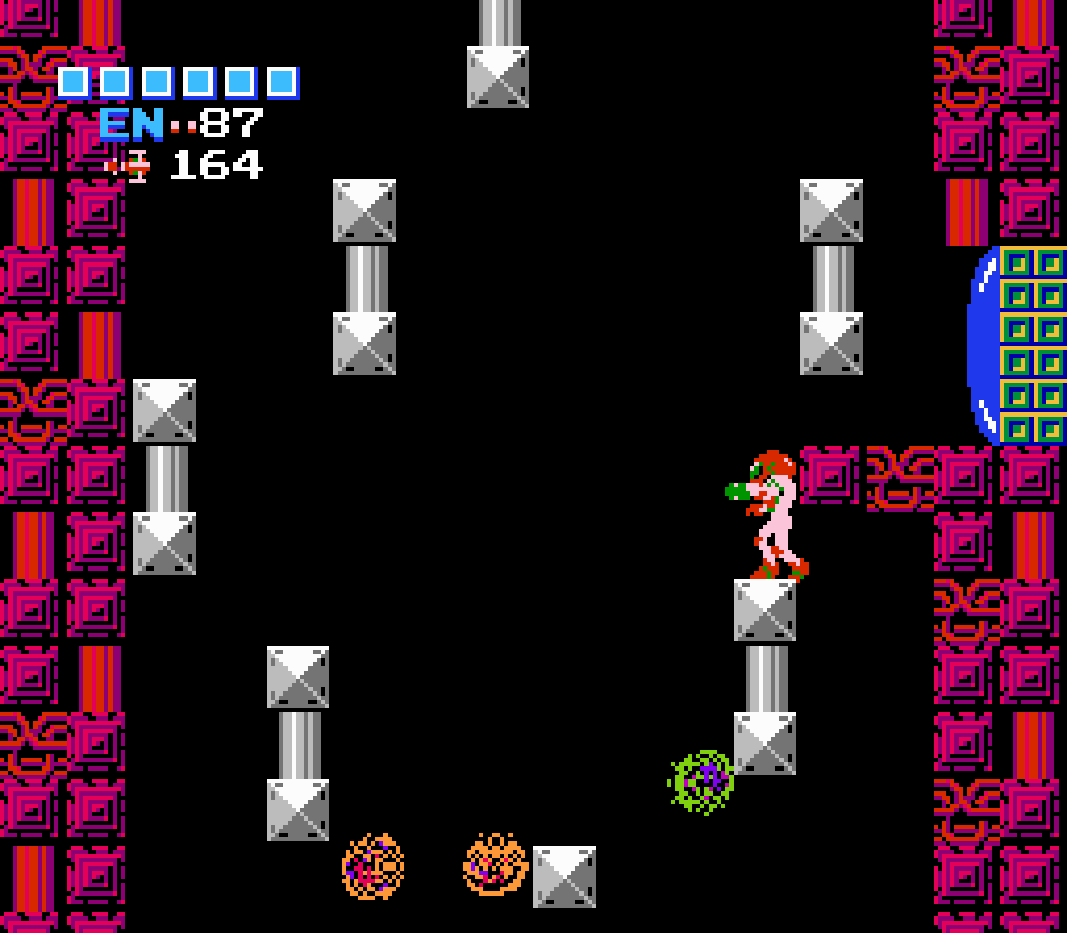
According to Wikipedia, Metroid was released on August 15th, 1987, a week before The Legend of Zelda. I don’t know if this is true, there’s no footnote saying where they got this information. Either way, Metroid and Zelda were released very close to one another, and that is strange and special.
Metroid, like Zelda, is another game I didn’t get into as a kid for the same reasons. Non-linear, explore-where-you-will, try to find your own way gameplay intimidated me. So I held off until years later, after Metroid Prime had come out and my heart was won over by the series as a whole.
I don’t think Metroid has aged as well as Legend of Zelda in terms of mechanics and overall “level” design, but its atmosphere remains top-notch. The world feels so dangerous and claustrophobic, and the ambient soundtrack really anchors you in a bizarre, alien landscape. In terms of atmosphere alone, I prefer Metroid over Zelda.
For more thoughts on Metroid, you can check out my full-length post on the game below.

ARKANOID / ATHENA


If you need a break between all that adventuring, Arkanoid’s arcade-y ball bouncing has you covered. And if you just want to be reminded of how terrible a video game can be, Athena is the one.
I’ve already discussed my thoughts on both games in a previous paid post, so you can check that out here if you’d like.

And hey, if you’re not a paid subscriber, now’s the perfect time to get in on that. “Nintendo is Great” is 60% off until April 17th, which amounts to $2/month or $20/year. With that, you get access to about half of my posts that otherwise have paywalls. Lord willing, I’ll have more fun exclusive perks for subscribers later this year. Thanks for your support!
ELEVATOR ACTION (NES Catalog #056)
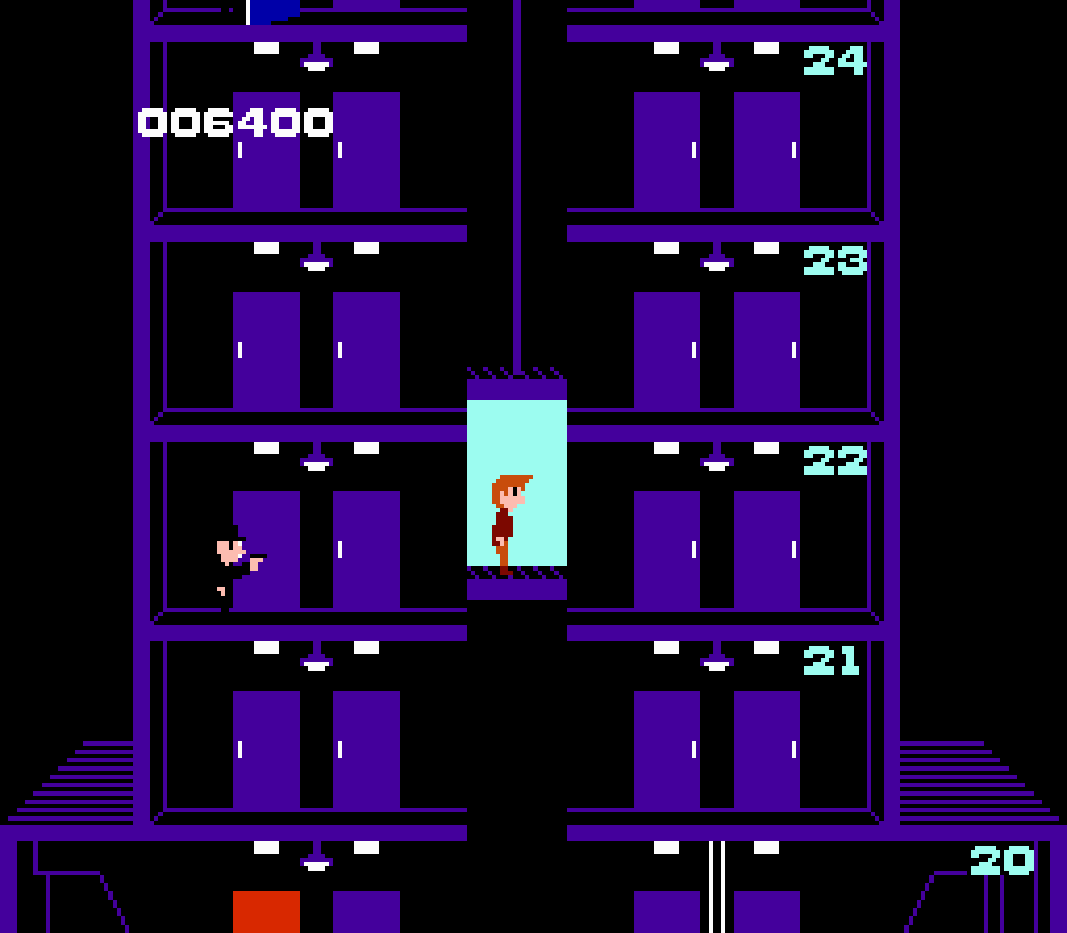
Elevator Action. The name seems counterintuitive. Elevators are fine twentieth-century technology, but nothing about them is particularly thrilling. Unless, of course, you’re a secret agent retrieving documents from strangely colored, high-rise buildings, while men in black fedoras and trench coats shoot at you, like you’ve just stolen the Secrets of the Universe. Perhaps then elevators carry some excitement.
You play as ???, a mysterious figure working for an equally mysterious government agency. Which government? Why? For what purpose? Who cares. Sensitive documents are hidden behind red doors, simple as that. Use the elevators to descend from the thirtieth floor down to the first, grabbing documents as you go. Behind the blue doors, dark men often appear and shoot on sight. For some reason, you’re wearing a red turtleneck and you’re real easy to spot. Maybe next time, disguise yourself as the enemy or something.
The buildings have preposterous layouts. From floors 30-19, an elevator takes you down the center of the building with doors on either side. Floors 19-17 require escalators to descend. Floors 15-11 are shrouded in darkness, but doors with agents linger beneath the still black rooms. Floors 10-8 have two elevators operating on both the far left and right side, while doors are interspersed in the middle section. Finally, Floors 7-1 have five elevators operating in the bulk of the building, with single doors sprouting from the sides. These latter sections are free-for-alls, with agents appearing and shooting haphazardly through shaft corridors. Only one of the five shafts takes you to the exit.
Endless buildings, each containing thirty floors, red doors with documents and blue doors with agents clad in black, forever and ever. When is Agent Unknown’s task complete? Perhaps when the Secrets of the Universe have finally been exposed to the people. Probably a long time from now.
THE LEGEND OF KAGE (NES Catalog #057)

Kage’s the silent warrior type, the kind of guy who’ll leave you alone if you don’t cross him. Steal his girl Kiri, though… that’s like asking for his sword to cut you in half. In Legend of Kage, an assortment of foolish men do just that, then have the gall to act surprised when Kage asserts his legendary status.
Kage can leap with the best of them, it’s his bread and butter. Combined with his unlimited shuriken and lightning-fast sword skills, the shinobi and monks that dare attack him are dead before they know it. Jumping between trees with a single bounce while cutting down your enemies is a truly magical experience. In the forest stage, particularly, Kage is in his element. You could climb the trees, but forget it, it slows you down. Run like a gazelle, soar like a flying squirrel, let the wind hit your face, and watch your enemies fall before you.
Unfortunately, The Legend of Kage’s only half a game, even by 1987 standards. There are four levels, three of which can be completed in under a minute. Once beaten, you rescue Kiri, but she’s quickly kidnapped again. Fight a boss, then play the same four levels again twice more (for a total of 12 stages), before finally beating the Blue Demon and calling it a game.
The first and best level is the forest, where Kage can fight and frolic with abandon. At least you get to play it more than once. The other three stages – a moat, a castle wall, and the castle itself – are fine enough, but they’re over so fast, blink and you’ll miss ‘em. Surely a couple more unique stages wouldn’t hurt? All in all, The Legend of Kage can be fully completed in less than thirty minutes. Wasted potential, alas.
Have you played any of this month’s crop of games? What are your favorites? Please let me know in the comments below!
THE NINTENDO FUN CLUB NEWS – SUMMER 1987
The second issue of the Nintendo Fun Club News looks a lot like the first, albeit with a couple additional pages of… “content”? Perhaps “filler” is a more appropriate word.
Let’s dive in.

There was once a time, friends, when The Legend of Zelda was just a single game. Not an insanely popular franchise spanning decades. Just a lone adventure that millions of kids adored throughout the late 80s. This thinly-veiled sales copy is a reminder of that.
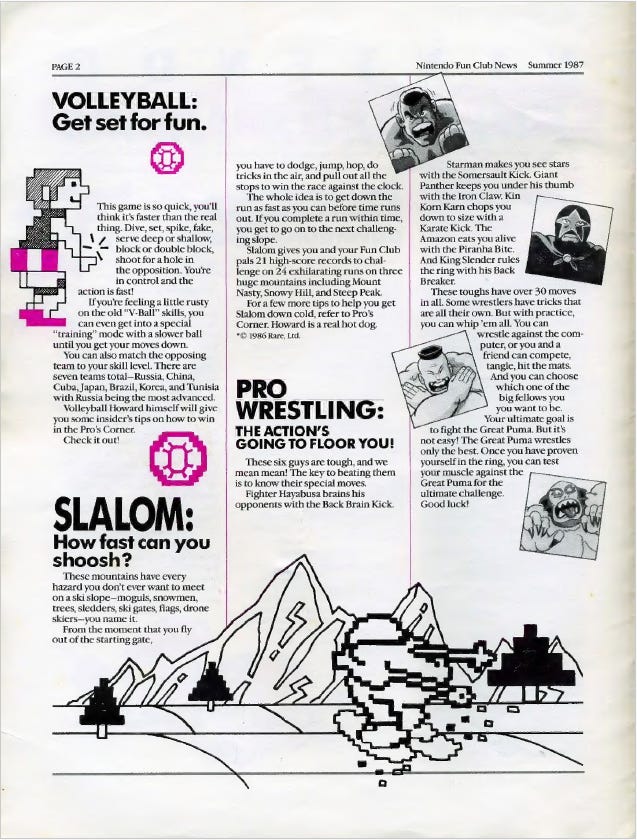
Trying to make Volleyball sound like a fun game? Oh, you better believe that’s a paddlin’. Also, notice that the Volleyball player and the Slalom skier’s behinds are considerably less, er, confrontational than they are in their respective games.

Some of these tips, like “Small Fiery Mario,” I did not know. But what really gives me pause is the bold assertion at the bottom of the second column that Minus Worlds Two, Three, and Four exist! Japan’s been holding out!

The NES Advantage is the second best NES controller after the dog-bone variant, and if you’ve never tried one, you’re missing out. Also, the “Lance” in the photo is none other than Lance Barr, an industrial designer who worked at Nintendo of America for almost 40 years. He is credited with designing the look of the NES, the SNES, the Zapper, and the Advantage. An absolute legend.

Well, this is… something. I know child prodigies exist, but if this five-year-old really put this incredible garbage robot together without her parents’ help, then what the heck does she need ROB for? Let ROB help a lesser minded child!
Where is Katherine Spiers today, though? She’s 42 or 43-years-old as of 2025. Hope she’s well.
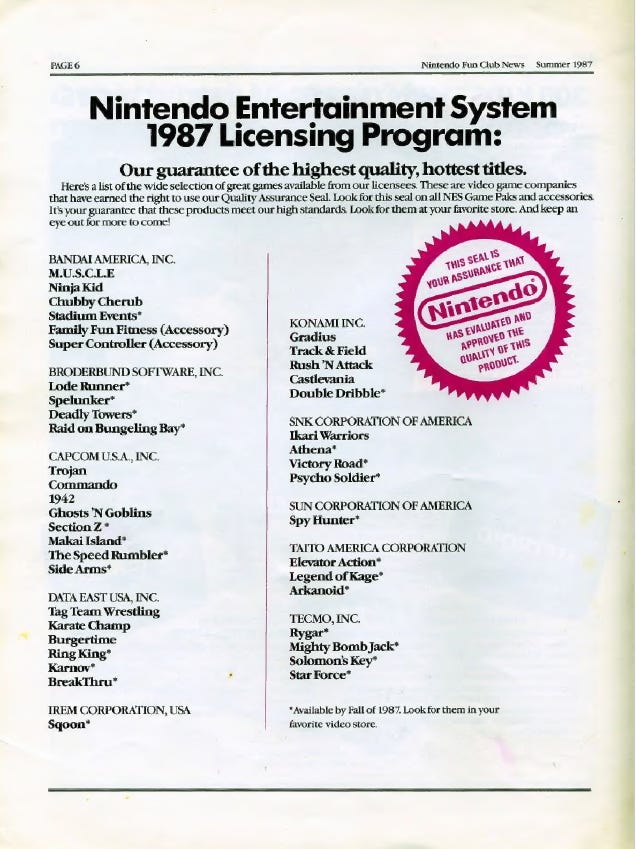
Ah yes, the coveted Nintendo seal of “quality.” Basically, pay Nintendo a licensing fee and they’ll slap one of those seals on your game, even if the game in question is not playable.
Also, can you name the games on this list that never actually came to North American territories? Let me know in the comments!

Not gonna lie, Howard Philips’ role at Nintendo of America sounds pretty awesome. Good on him for landing such an amazing position before Nintendo really blew up in America.
Also, I’d love to meet someone that beat Ganon and called that 800 number to let Nintendo know of their gaming prowess.

I’ve touched on the How to Win at Super Mario Bros. book and the Nintendo scorepads before, but I’ve never seen these hot t-shirts and sweatshirts, modeled by Mr. Philips himself.
Also, in the first Fun Club newsletter, the book and scorepads were free, but now they cost money. Quite the fast turnaround!

Only Steven Simms’ letter sounds legitimate. The others sound like Nintendo employees.
As for me, I’ll be starting a local Fun Club chapter here in Arizona and throwing a totally tubular “video party” for me and my friends.

This crossword puzzle is tough. 80s gamers wouldn’t want it any other way.
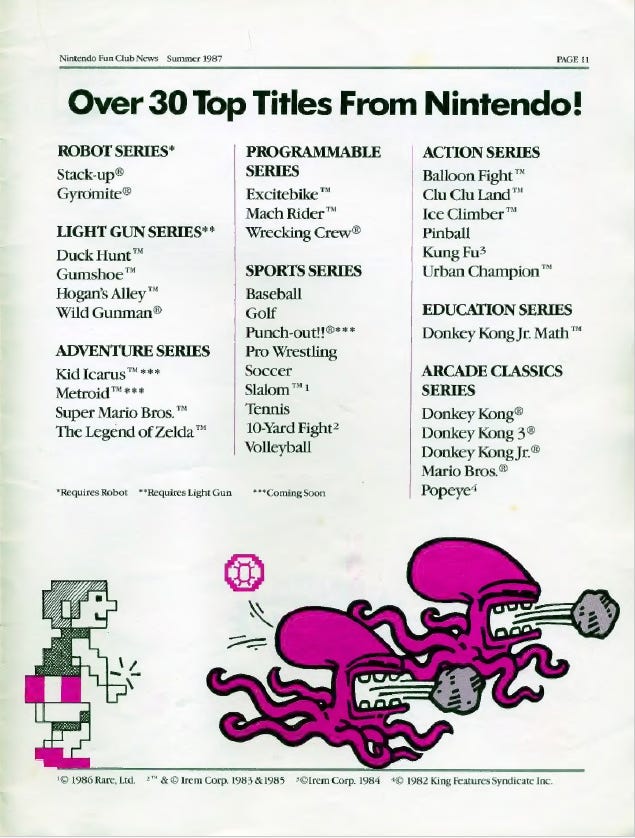
This release list implies that The Legend of Zelda is already available in stores, but Metroid is still coming soon. Does this mean that Zelda and Metroid didn’t release in the same month? Could the Internet have lied to us?!
ONLY FROM NINTENDO…
THE ZELDA RAP IS HAUNTINGLY REAL
Another beast of an issue is complete! Thanks for reading! If you enjoyed it and think you might want to read about more Nintendo shenanigans, please subscribe below!
Loved the news letter pages. The idea of picking up the landline, dialling a number just to talk mad shit about beating an NES game is amazing. Great post!
You say it's an insane strategy, but if the Switch 2 was launching Day One with a new Zelda AND Metroid 4, it would be the fastest selling console of all time. When it hit stores it would be utter pandemonium.